AI Chatbot Implementation
Details
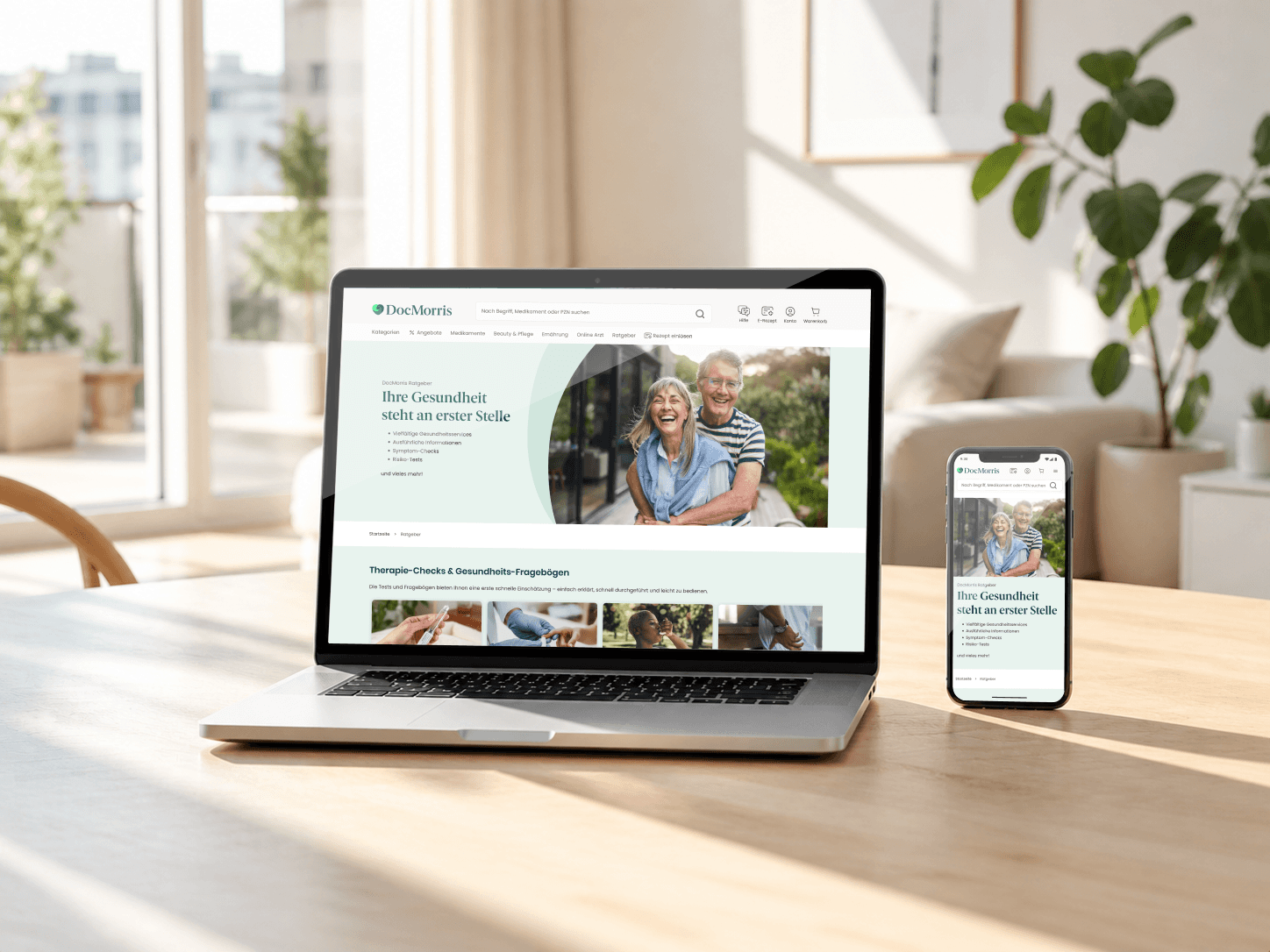
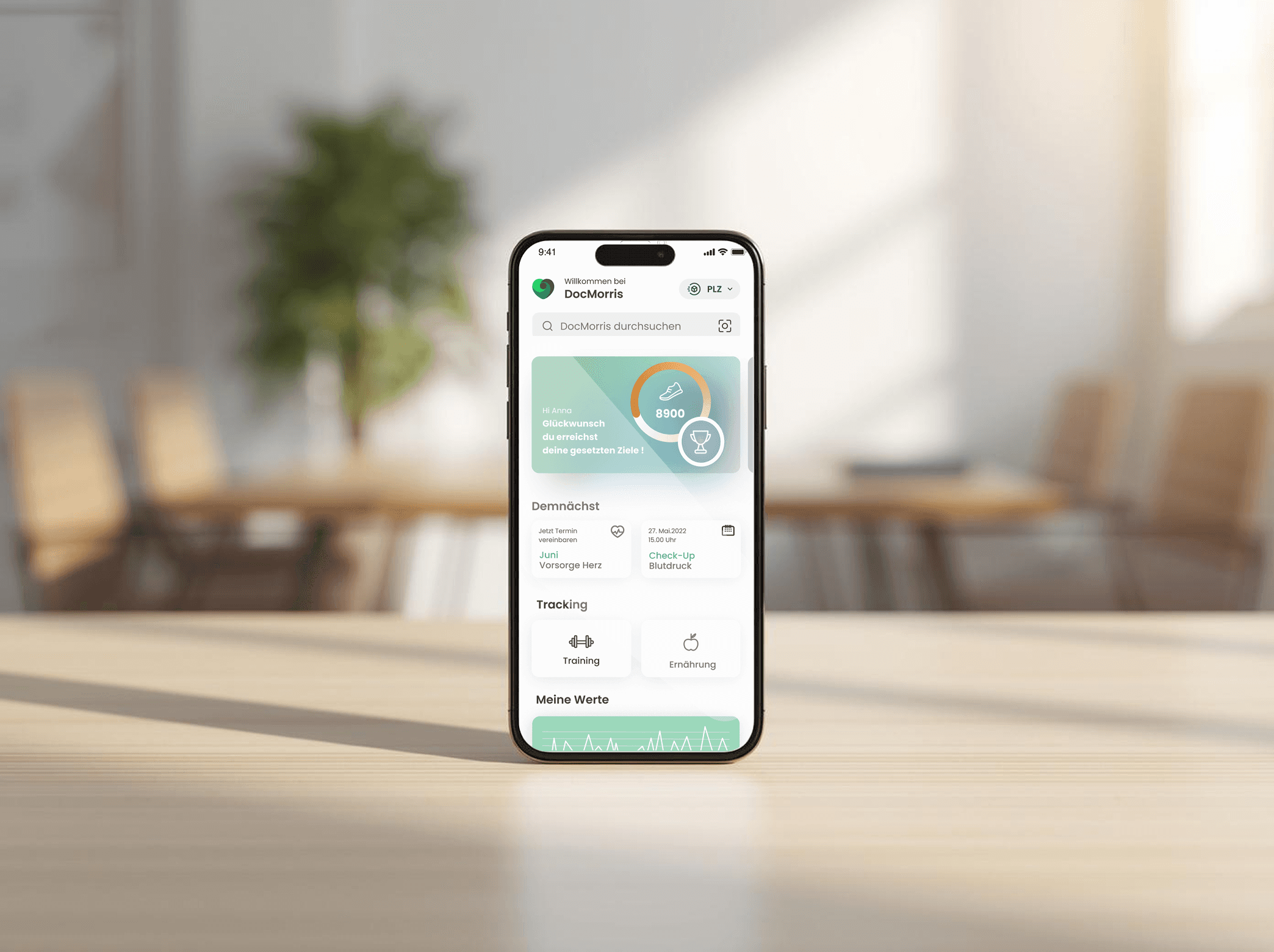
Strategic implementation of the Zowie AI chatbot on DocMorris, optimizing the service experience and reducing customer support load through intuitive self-service design.
Categories
E-Commerce
Customer Service
Date
Client
DocMorris
Project Overview & Responsibilities
Project Overview
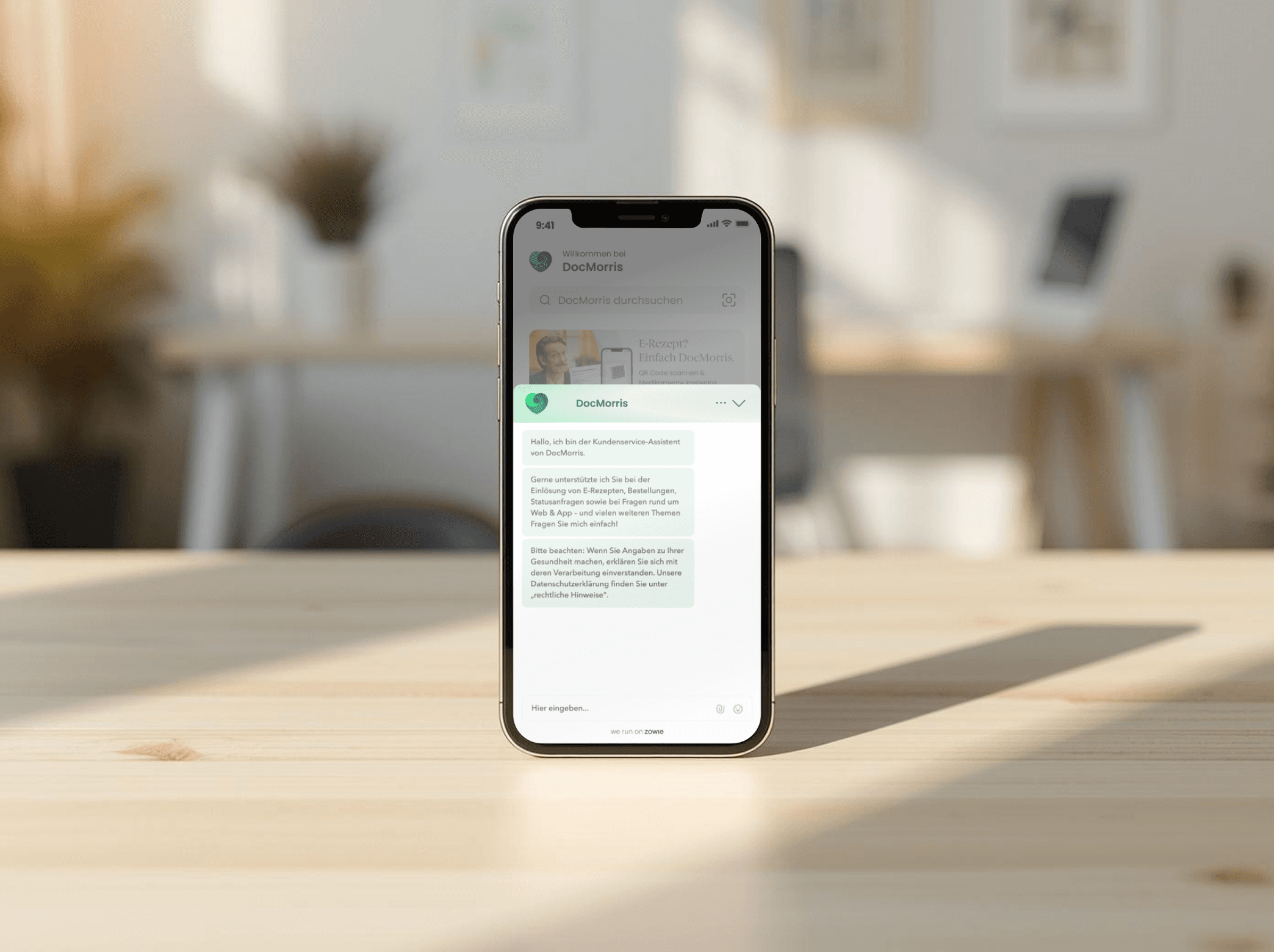
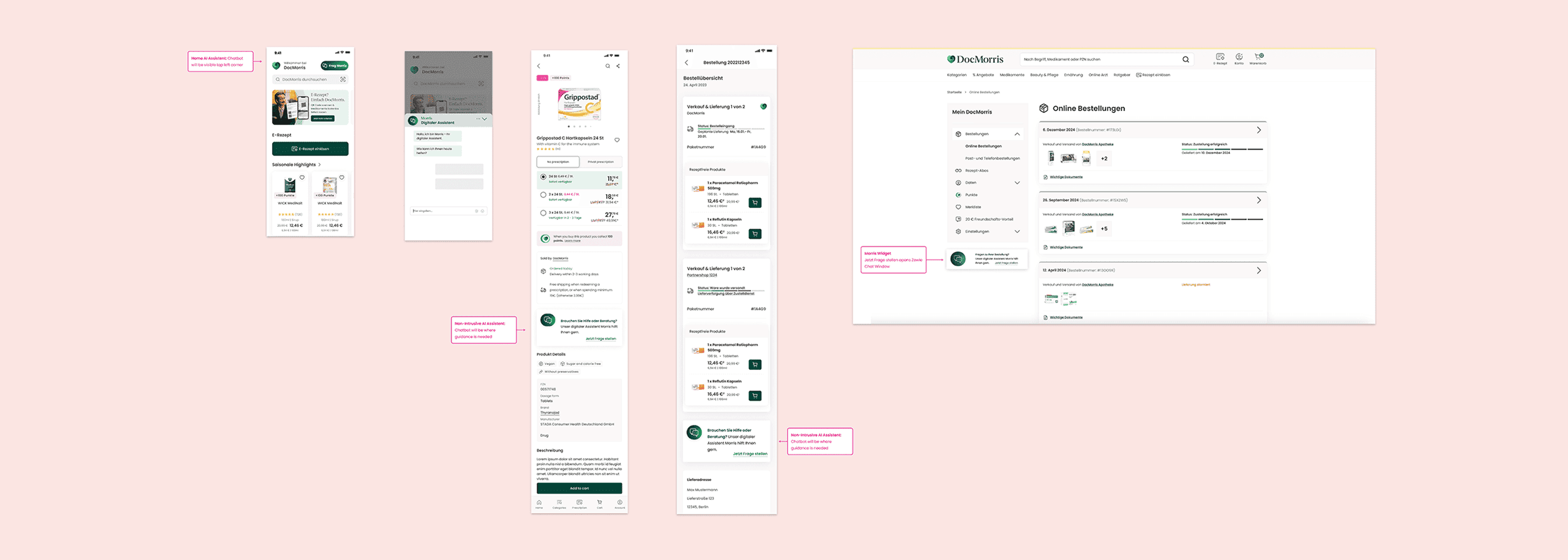
An AI-based customer service chatbot (Zowie) was strategically introduced across the DocMorris website and app to reduce service request volume and improve the self-service experience. My role involved leading the UX research, concept design, and usability optimization to create a seamless, supportive, and legally compliant assistant that supports users from product discovery to order inquiries.
My Role & Responsibilities
Led UX research and concept & UI design for the Zowie AI chatbot implementation on App and Web.
Conducted customer journey analysis and stakeholder interviews to identify core service pain points and derive user-centered requirements.
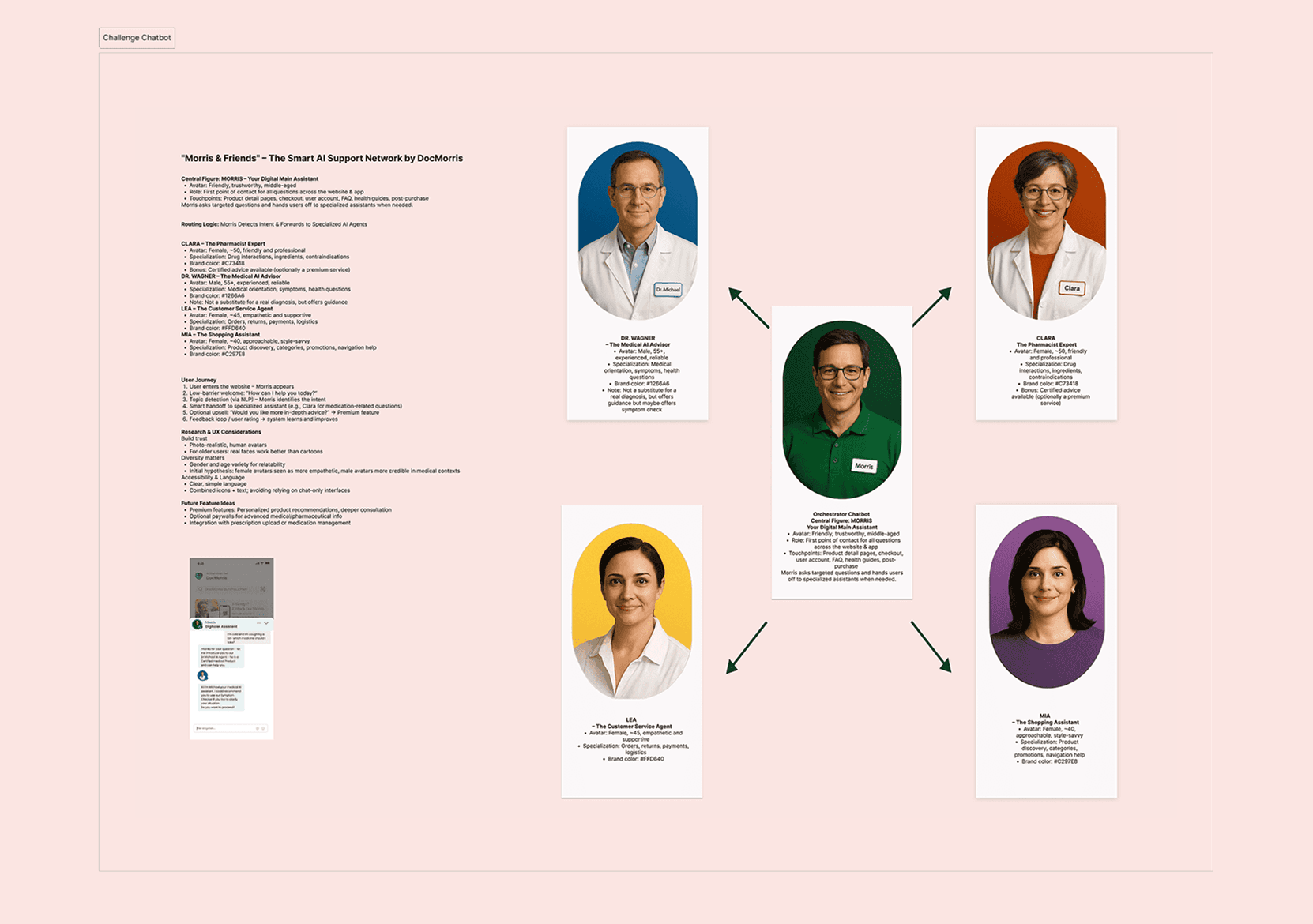
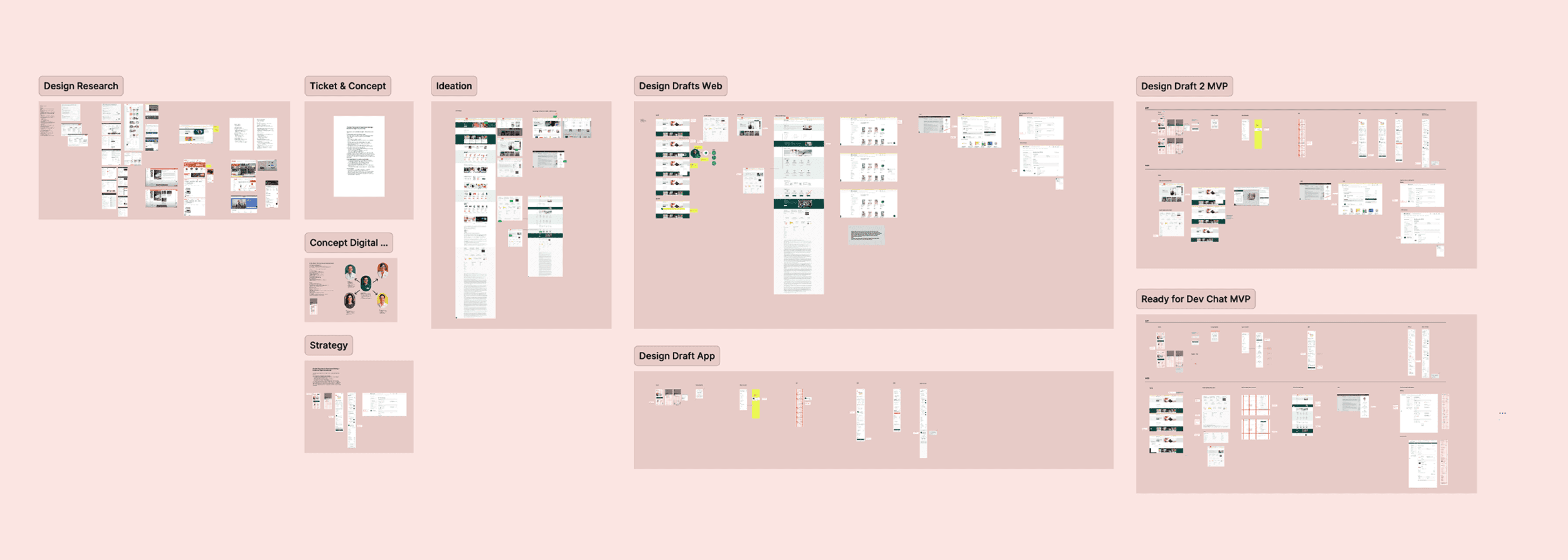
Developed conversation design, flow diagrams, and wireframes to define assistant behavior and information architecture.
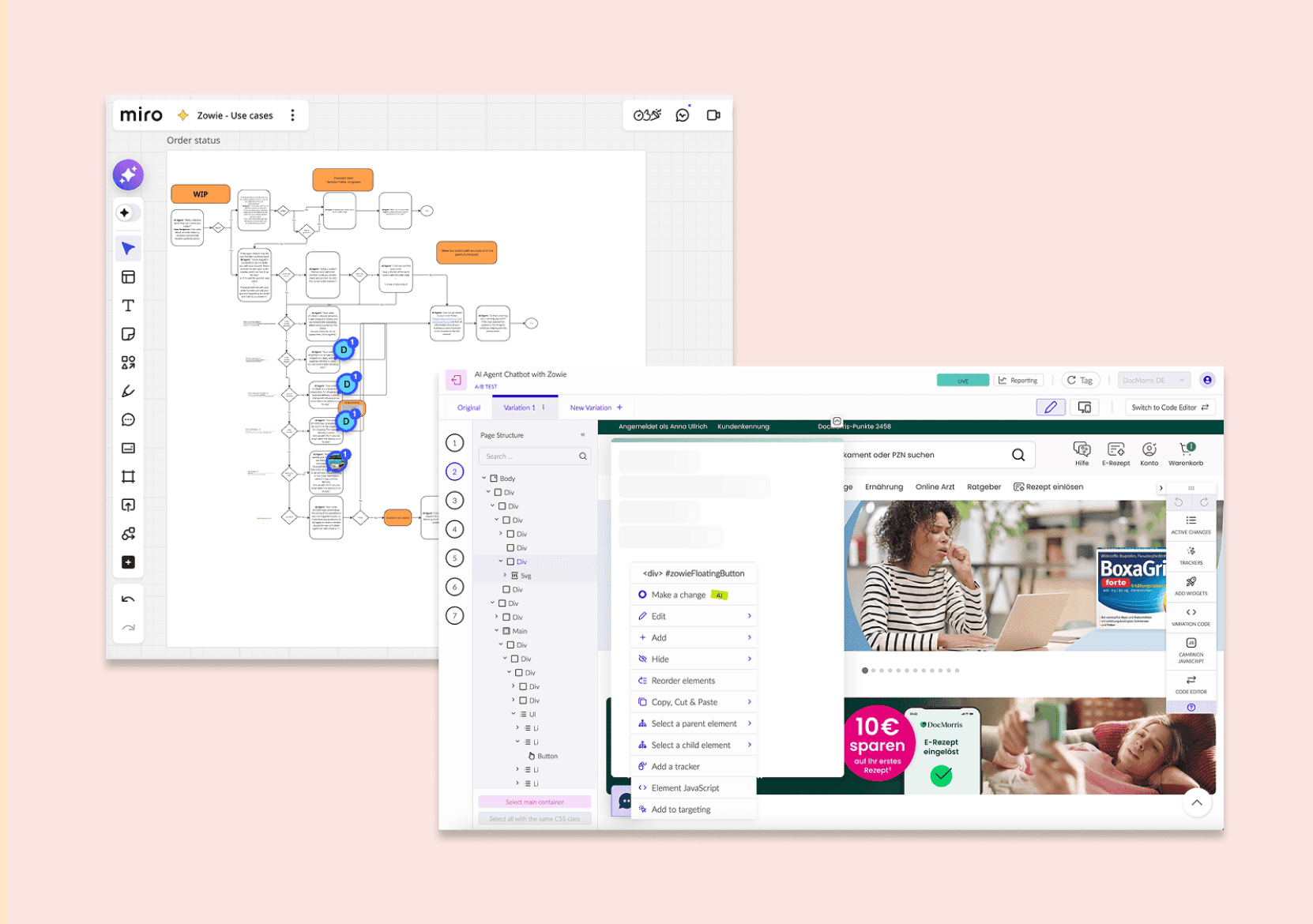
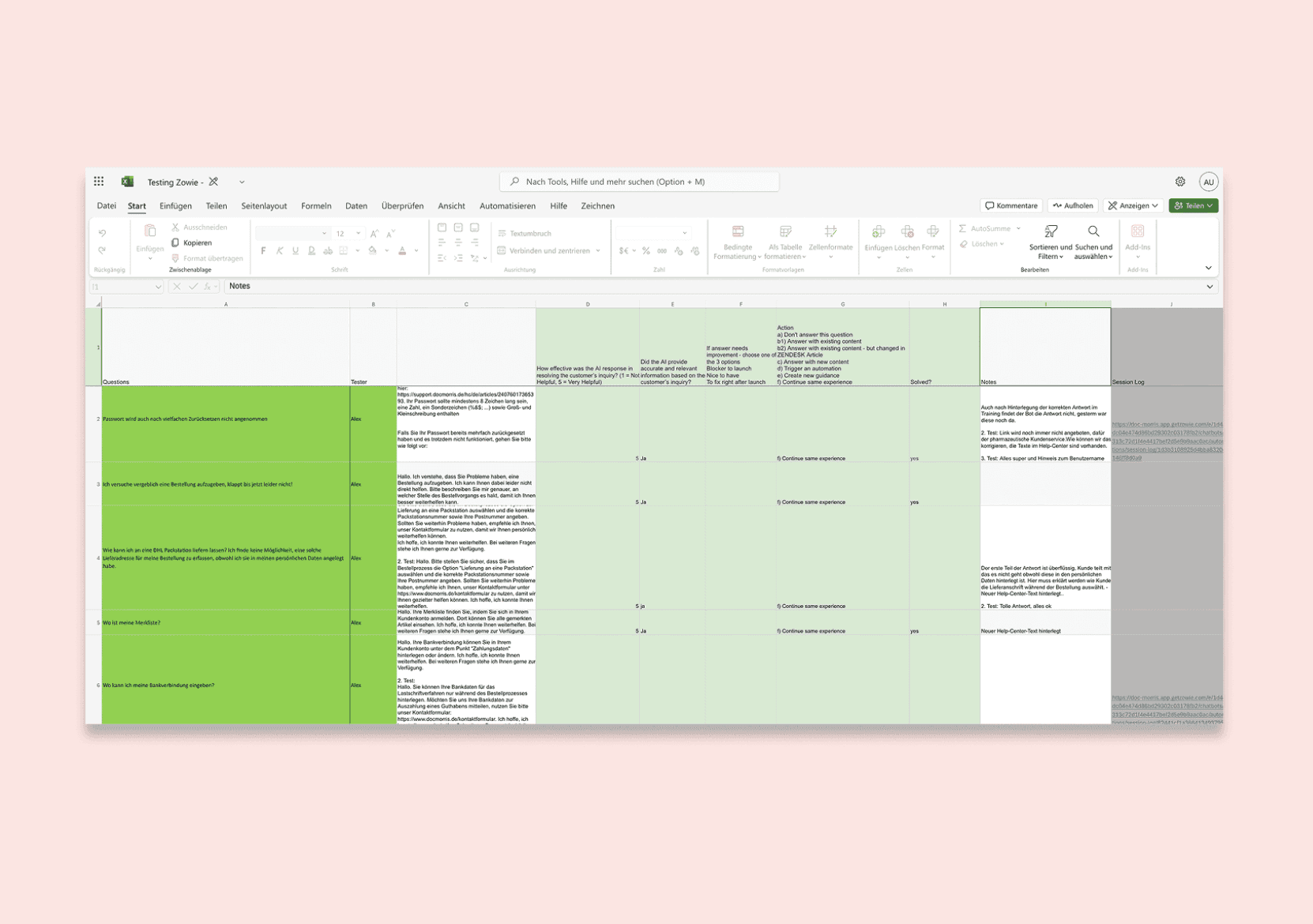
Defined optimal entry points and conducted A/B and qualitative testing to ensure answer accuracy and maximized self-service success rates.
Collaborated cross-functionally to align the chatbot's tone, behavior, and interaction patterns with the broader service ecosystem.
Challenges & Approach
Challenge | Approach & Solution |
|---|---|
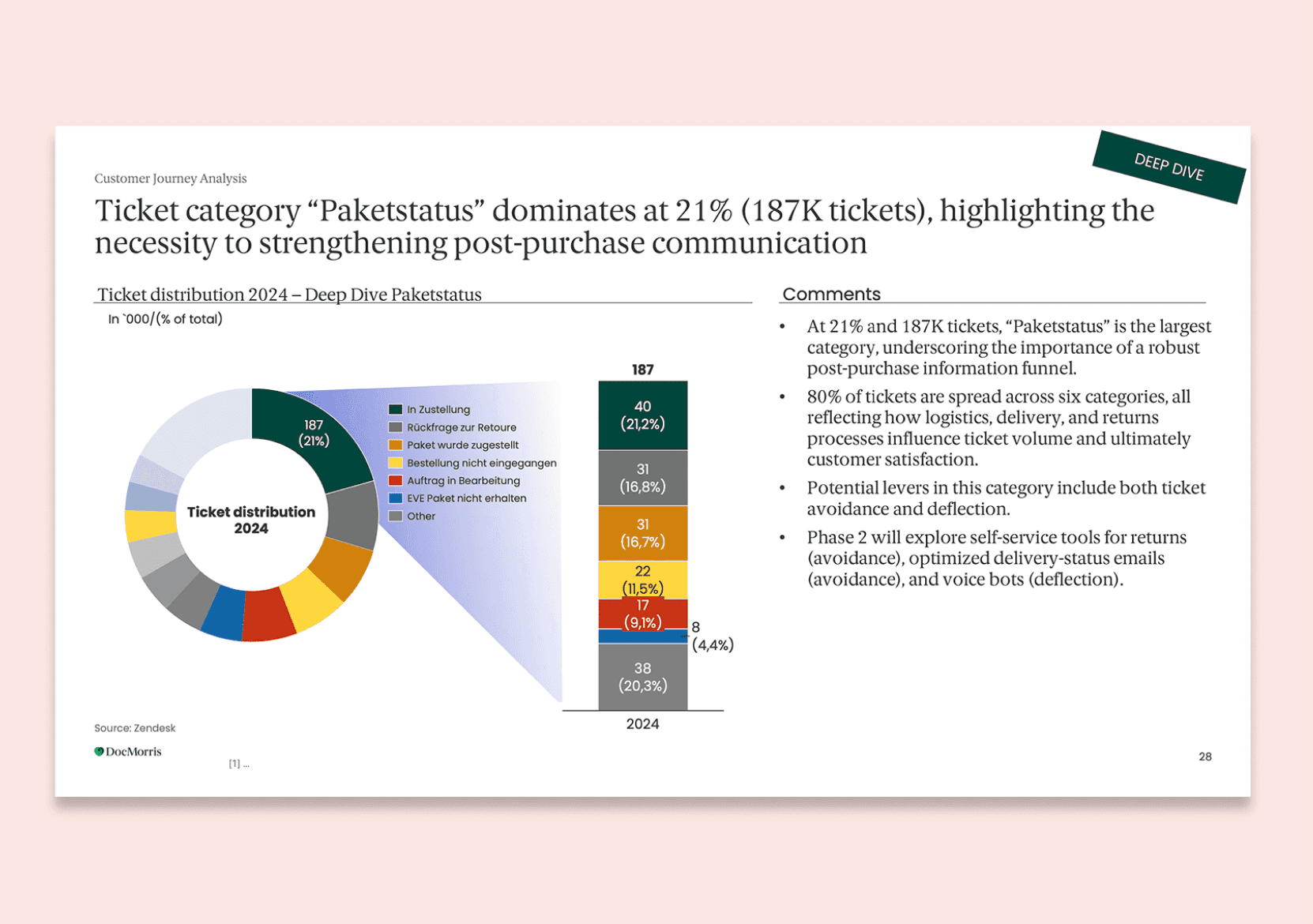
High service request volume caused by unclear guidance and fragmented information structures. | Analysis Zendesk ticket data and conducted service team interviews to identify recurring question patterns and critical failure points. |
Integrating an AI assistant without disrupting existing user flows. | Designed non-intrusive, context-aware entry points and tested variations through A/B experiments. |
Ensuring consistent AI behavior across multiple touchpoints and teams. | Created a unified assistant framework defining personality, tone, and response logic for cross-team alignment. |
Complying with accessibility, security, and privacy regulations. | Coordinated with Security, Legal, and Data Protection to validate compliant conversation flows and interface patterns. |
Tools & Methods
Area | Tools/Method |
|---|---|
UX Research | Stakeholder interviews, User surveys, task analysis, analysis of service ticket volumes, A/B Tasty for A/B Tests, Miro for synthesis, Baymard Institute for guidelines |
Synthesis & Ideation | Affinity mapping, journey analysis, problem clustering, co-creation workshops |
UX/ UI Design | Figma prototypes, wireframes, conversation flows, entry point concepts, rapid prototyping |
Technical & Data Collaboration | Zendesk data analysis, collaboration with Developers and Customer Service teams |
Agile Collaboration | Jira, Confluence, iterative refinement with cross-functional teams |
Outcome
The integration of the AI assistant led to a clear reduction in customer service inquiries and improved overall support efficiency. The assistant helped resolve recurring questions and provided clearer guidance in key service moments, easing the operational load on support teams.
Outcome & Implemented Improvements
Defined assistant behavior, entry points
Improved service navigation through AI-driven guidance
Prototypes and concept packages enabling fast implementation
Unified cross-team guidelines ensuring consistent assistant behavior
Business & User Impact
The main goal—reducing customer service request volume—was successfully achieved. Early user feedback was mixed: many users valued faster answers, while others preferred human interaction for certain topics. As a result, ongoing evaluation, further A/B testing, and iterative refinement are needed to determine where AI support is most effective and where human service remains essential.
AI Chatbot Implementation
Details
Strategic implementation of the Zowie AI chatbot on DocMorris, optimizing the service experience and reducing customer support load through intuitive self-service design.
Categories
E-Commerce
Customer Service
Date
Client
DocMorris
Project Overview & Responsibilities
Project Overview
An AI-based customer service chatbot (Zowie) was strategically introduced across the DocMorris website and app to reduce service request volume and improve the self-service experience. My role involved leading the UX research, concept design, and usability optimization to create a seamless, supportive, and legally compliant assistant that supports users from product discovery to order inquiries.
My Role & Responsibilities
Led UX research and concept & UI design for the Zowie AI chatbot implementation on App and Web.
Conducted customer journey analysis and stakeholder interviews to identify core service pain points and derive user-centered requirements.
Developed conversation design, flow diagrams, and wireframes to define assistant behavior and information architecture.
Defined optimal entry points and conducted A/B and qualitative testing to ensure answer accuracy and maximized self-service success rates.
Collaborated cross-functionally to align the chatbot's tone, behavior, and interaction patterns with the broader service ecosystem.
Challenges & Approach
Challenge | Approach & Solution |
|---|---|
High service request volume caused by unclear guidance and fragmented information structures. | Analysis Zendesk ticket data and conducted service team interviews to identify recurring question patterns and critical failure points. |
Integrating an AI assistant without disrupting existing user flows. | Designed non-intrusive, context-aware entry points and tested variations through A/B experiments. |
Ensuring consistent AI behavior across multiple touchpoints and teams. | Created a unified assistant framework defining personality, tone, and response logic for cross-team alignment. |
Complying with accessibility, security, and privacy regulations. | Coordinated with Security, Legal, and Data Protection to validate compliant conversation flows and interface patterns. |
Tools & Methods
Area | Tools/Method |
|---|---|
UX Research | Stakeholder interviews, User surveys, task analysis, analysis of service ticket volumes, A/B Tasty for A/B Tests, Miro for synthesis, Baymard Institute for guidelines |
Synthesis & Ideation | Affinity mapping, journey analysis, problem clustering, co-creation workshops |
UX/ UI Design | Figma prototypes, wireframes, conversation flows, entry point concepts, rapid prototyping |
Technical & Data Collaboration | Zendesk data analysis, collaboration with Developers and Customer Service teams |
Agile Collaboration | Jira, Confluence, iterative refinement with cross-functional teams |
Outcome
The integration of the AI assistant led to a clear reduction in customer service inquiries and improved overall support efficiency. The assistant helped resolve recurring questions and provided clearer guidance in key service moments, easing the operational load on support teams.
Outcome & Implemented Improvements
Defined assistant behavior, entry points
Improved service navigation through AI-driven guidance
Prototypes and concept packages enabling fast implementation
Unified cross-team guidelines ensuring consistent assistant behavior
Business & User Impact
The main goal—reducing customer service request volume—was successfully achieved. Early user feedback was mixed: many users valued faster answers, while others preferred human interaction for certain topics. As a result, ongoing evaluation, further A/B testing, and iterative refinement are needed to determine where AI support is most effective and where human service remains essential.