E-Commerce Flow Optimization
Details
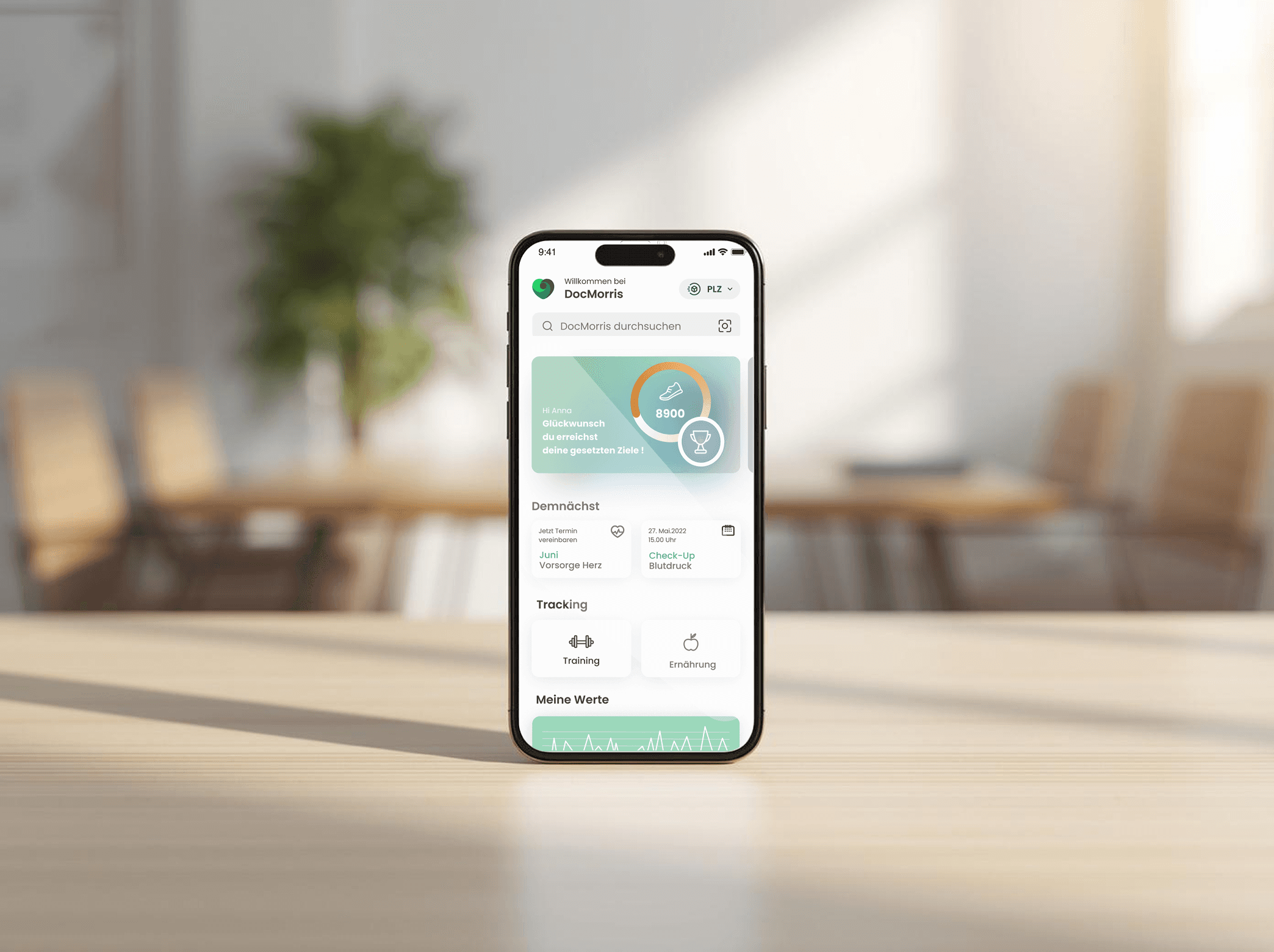
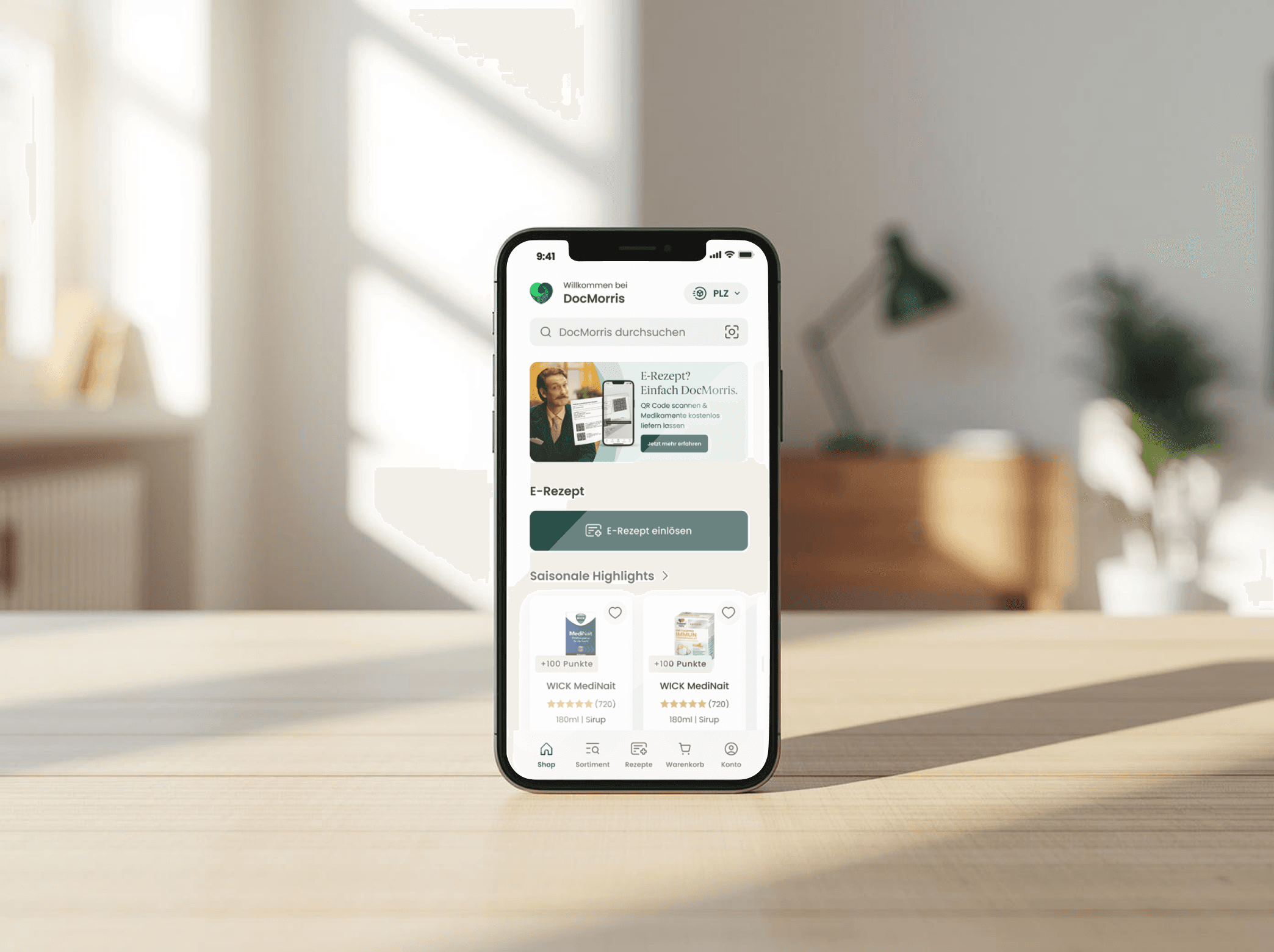
Analyzed core e-commerce user journeys via qualitative research, delivering data-driven design improvements to boost conversion on the DocMorris App and Web.
Categories
E-Commerce
Research
Date
Client
DocMorris
Project Overview & Responsibilities
Project Overview
As part of the ongoing enhancement of the DocMorris app and web platform, a qualitative remote usability study was conducted to evaluate and improve core user journeys—including Home, Product Search, Product Detail Page, and Checkout. The goal was to identify friction points in the checkout flow, better understand user behavior, and derive data-driven recommendations for design and information architecture improvements.
My Role & Responsibilities
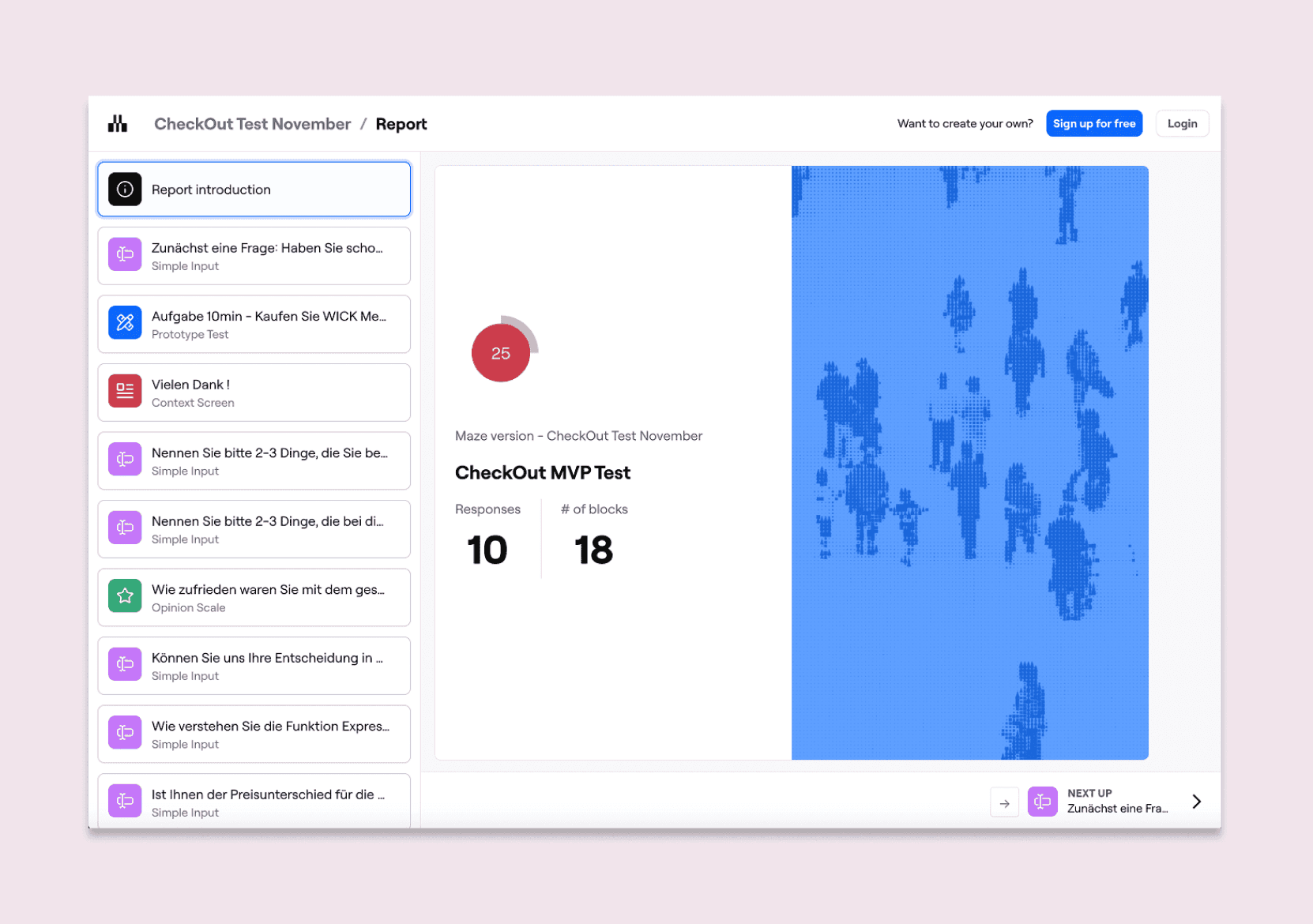
Planned, designed, and ran a remote usability test
Conducted complementary Card Sorting and Tree Testing
Created an interactive Figma click-prototype of the app as the test basis
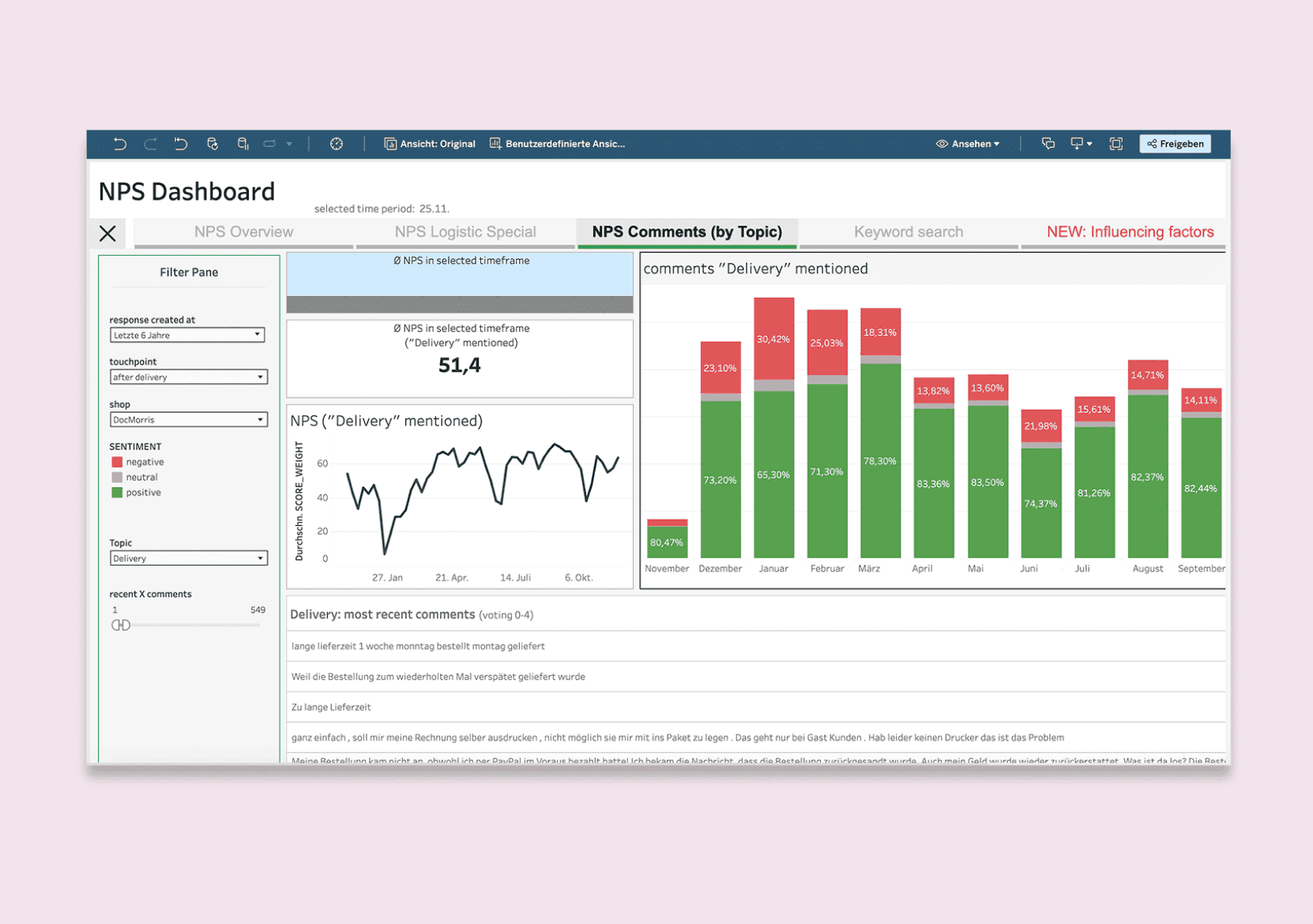
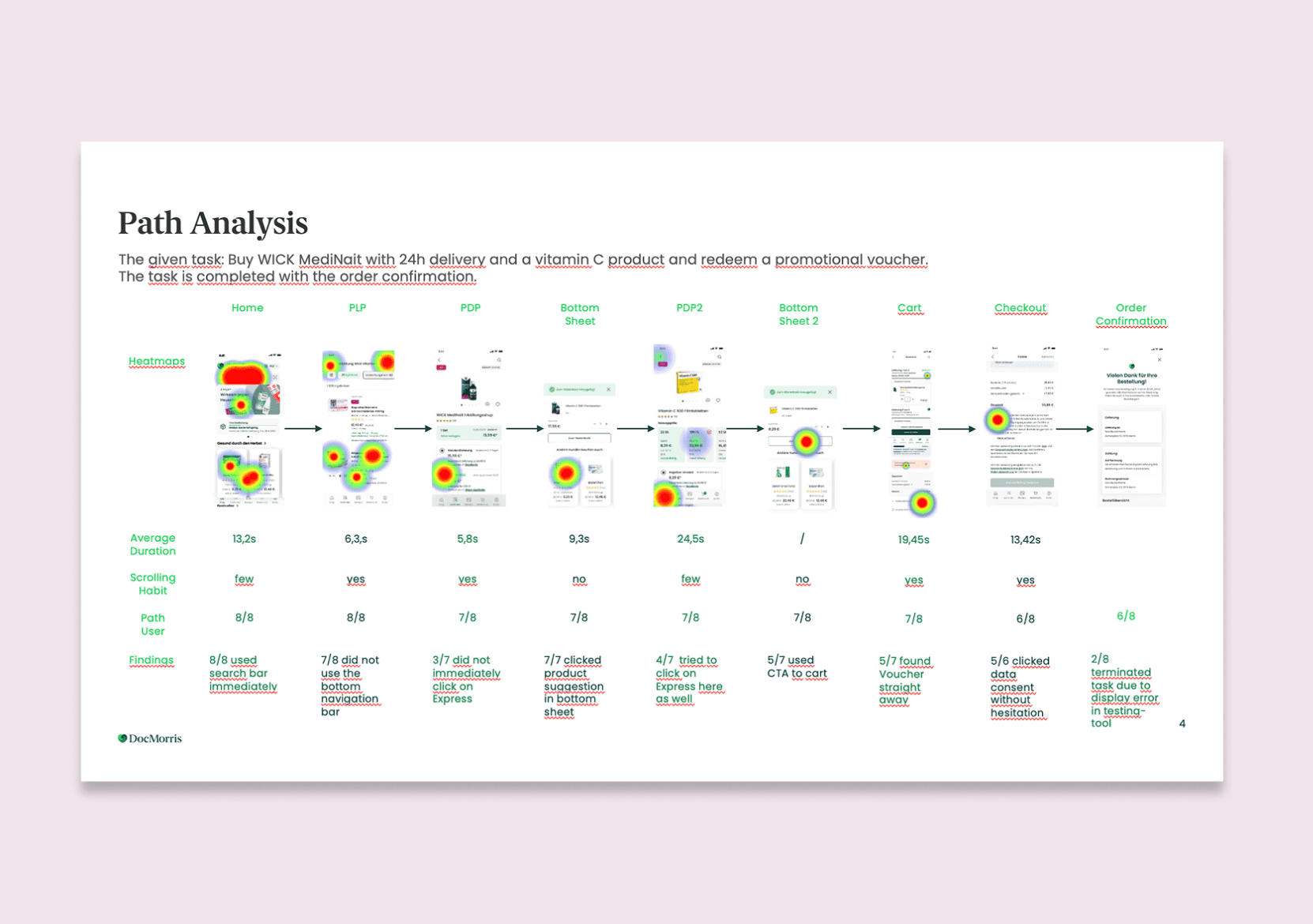
Collaborated with Data Analysts to combine qualitative insights with quantitative data (conversion metrics, drop-off points, heatmaps)
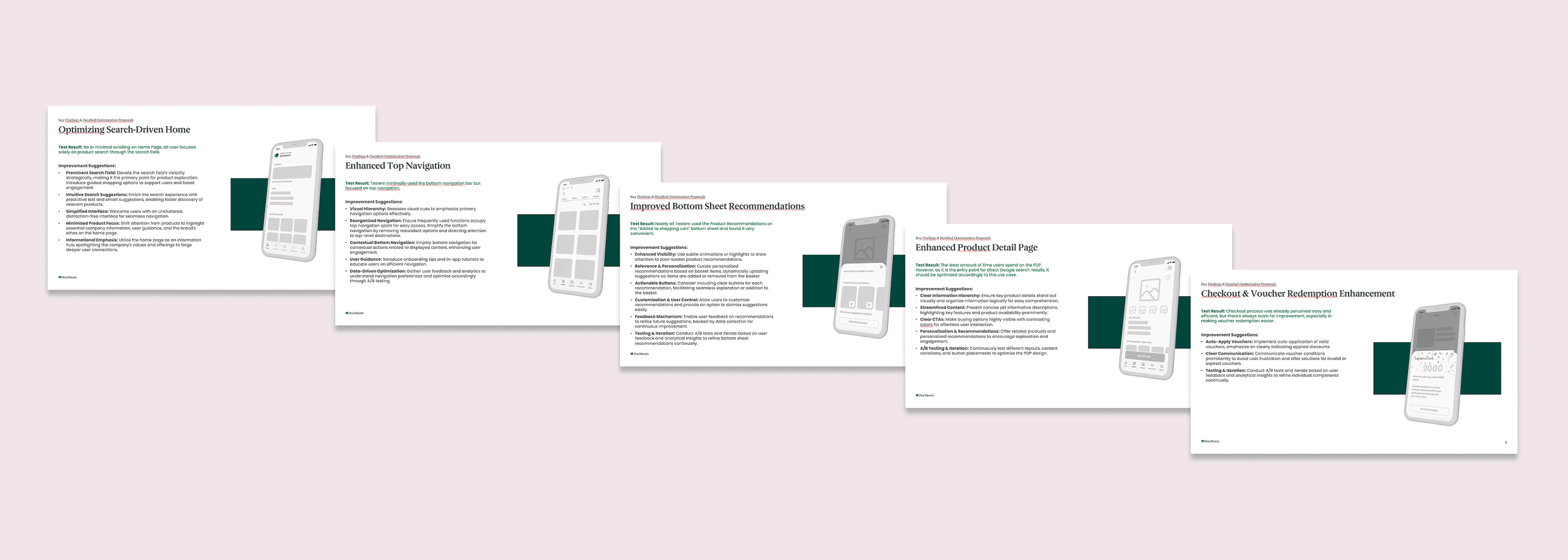
Synthesized findings into clear problem clusters and actionable recommendations
Presented insights, UX improvements, and low-fidelity wireframes to product teams
Derived data-informed UX recommendations for navigation, product detail pages, and checkout processes
Challenges & Approach
Challenge | Approach & Solution |
|---|---|
Diagnosing core drop-off points and validating hypotheses behind conversion friction points shown in quantitative data. | Conducted rigorous data analysis to pinpoint exact drop-off locations in core flows, followed by qualitative research (e.g., user interviews, task analysis) to validate assumptions and uncover root causes. |
Identifying usability issues across multiple high-traffic journeys without disrupting ongoing development work. | Ran remote tests with realistic tasks, triangulated findings with analytics, and validated assumptions through card sorting and tree testing. |
Low clarity in the checkout flow leading to avoidable drop-offs. | Mapped step-by-step behavioral patterns, analyzed heatmaps, and redesigned guidance patterns and layout hierarchy. |
Ensuring consistency between app and web experience. | Compared cross-platform patterns, created unified navigation principles, and recommended structural improvements. |
Tools & Methods
Area | Tools/Method |
|---|---|
UX Research | Remote usability testing (Maze,UserZoom/UserTesting), Heatmap analysis (Maze), card sorting, tree testing (Optimal Workshop), data insights review |
Synthesis & Ideation | Affinity mapping, issue clustering, co-creation with product teams, low-fidelity concept sketches |
UX/ UI Design | Figma click-prototypes (app), wireframes, navigation structures, design recommendations |
Agile Collaboration | Jira, Confluence, cross-team alignment |
Data Collaboration | Combined quantitative and qualitative data streams (conversion, drop-offs, heatmaps) |
Documentation | Miro, Presentations for stakeholders using Powerpoint, Confluence |
Documentation | Research Repository (Confluence), Reports & Presentations (PowerPoint, Miro) |
Outcome
As a result of the in-depth usability study, a comprehensive set of prioritized UX improvements was established. These design solutions were immediately fed into the product backlog and implemented in subsequent development iterations to address the identified conversion bottlenecks.
Outcome & Implemented Improvements
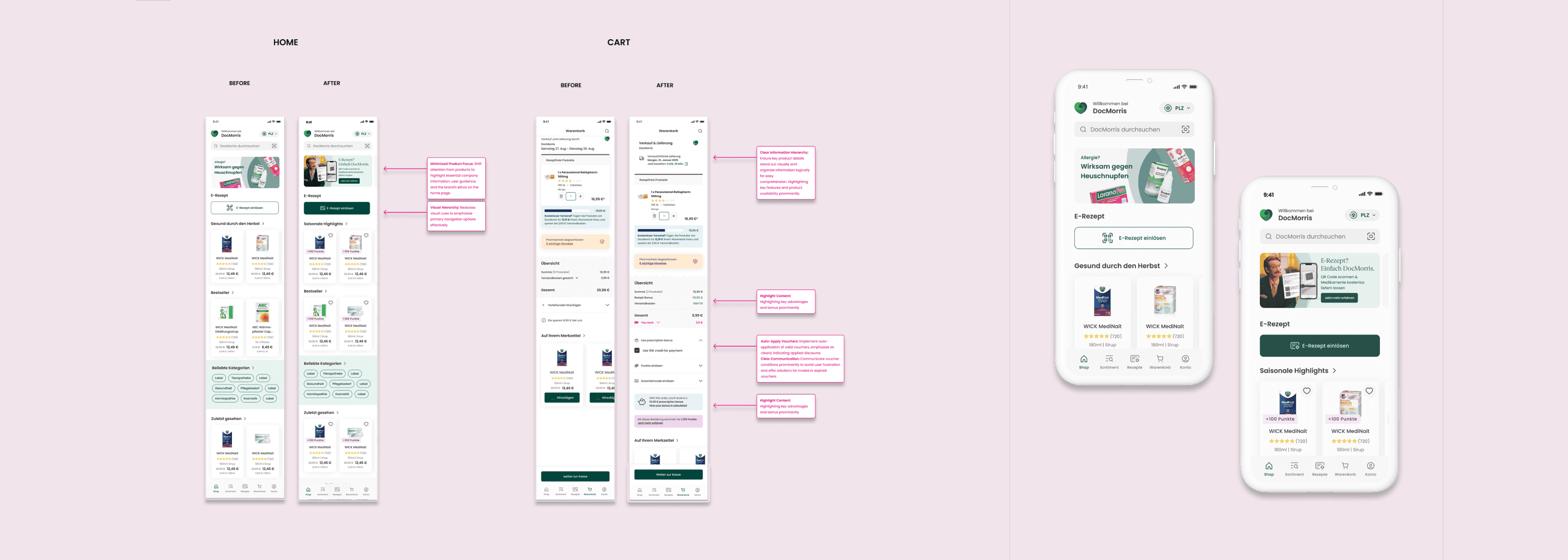
Clear UX recommendations for navigation, product detail pages, and checkout
Low-fidelity wireframes supporting immediate redesign and backlog initiatives
Improved alignment between app and web
Business & User Impact
Significant improvement in checkout conversion following targeted UI and UX updates
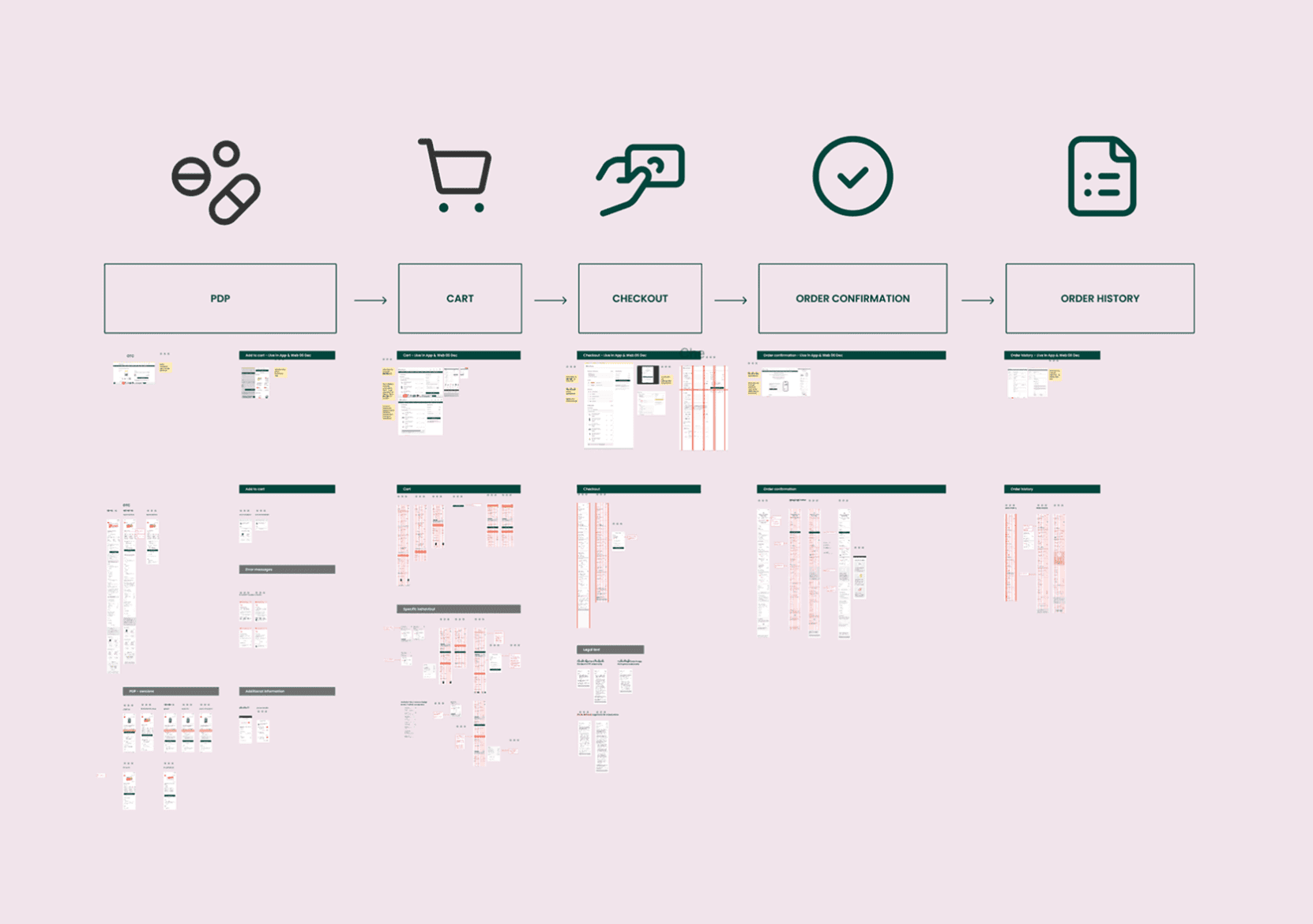
Noticeably simplified user guidance across essential flows (search → PDP → checkout)
Reduction of drop-off points validated through follow-up analytics
Research insights adopted into the next development roadmap and used as a baseline for future A/B tests
Strengthened collaboration between UX, Product, and Analytics through shared evidence-based priorities
E-Commerce Flow Optimization
Details
Analyzed core e-commerce user journeys via qualitative research, delivering data-driven design improvements to boost conversion on the DocMorris App and Web.
Categories
E-Commerce
Research
Date
Client
DocMorris
Project Overview & Responsibilities
Project Overview
As part of the ongoing enhancement of the DocMorris app and web platform, a qualitative remote usability study was conducted to evaluate and improve core user journeys—including Home, Product Search, Product Detail Page, and Checkout. The goal was to identify friction points in the checkout flow, better understand user behavior, and derive data-driven recommendations for design and information architecture improvements.
My Role & Responsibilities
Planned, designed, and ran a remote usability test
Conducted complementary Card Sorting and Tree Testing
Created an interactive Figma click-prototype of the app as the test basis
Collaborated with Data Analysts to combine qualitative insights with quantitative data (conversion metrics, drop-off points, heatmaps)
Synthesized findings into clear problem clusters and actionable recommendations
Presented insights, UX improvements, and low-fidelity wireframes to product teams
Derived data-informed UX recommendations for navigation, product detail pages, and checkout processes
Challenges & Approach
Challenge | Approach & Solution |
|---|---|
Diagnosing core drop-off points and validating hypotheses behind conversion friction points shown in quantitative data. | Conducted rigorous data analysis to pinpoint exact drop-off locations in core flows, followed by qualitative research (e.g., user interviews, task analysis) to validate assumptions and uncover root causes. |
Identifying usability issues across multiple high-traffic journeys without disrupting ongoing development work. | Ran remote tests with realistic tasks, triangulated findings with analytics, and validated assumptions through card sorting and tree testing. |
Low clarity in the checkout flow leading to avoidable drop-offs. | Mapped step-by-step behavioral patterns, analyzed heatmaps, and redesigned guidance patterns and layout hierarchy. |
Ensuring consistency between app and web experience. | Compared cross-platform patterns, created unified navigation principles, and recommended structural improvements. |
Tools & Methods
Area | Tools/Method |
|---|---|
UX Research | Remote usability testing (Maze,UserZoom/UserTesting), Heatmap analysis (Maze), card sorting, tree testing (Optimal Workshop), data insights review |
Synthesis & Ideation | Affinity mapping, issue clustering, co-creation with product teams, low-fidelity concept sketches |
UX/ UI Design | Figma click-prototypes (app), wireframes, navigation structures, design recommendations |
Agile Collaboration | Jira, Confluence, cross-team alignment |
Data Collaboration | Combined quantitative and qualitative data streams (conversion, drop-offs, heatmaps) |
Documentation | Miro, Presentations for stakeholders using Powerpoint, Confluence |
Documentation | Research Repository (Confluence), Reports & Presentations (PowerPoint, Miro) |
Outcome
As a result of the in-depth usability study, a comprehensive set of prioritized UX improvements was established. These design solutions were immediately fed into the product backlog and implemented in subsequent development iterations to address the identified conversion bottlenecks.
Outcome & Implemented Improvements
Clear UX recommendations for navigation, product detail pages, and checkout
Low-fidelity wireframes supporting immediate redesign and backlog initiatives
Improved alignment between app and web
Business & User Impact
Significant improvement in checkout conversion following targeted UI and UX updates
Noticeably simplified user guidance across essential flows (search → PDP → checkout)
Reduction of drop-off points validated through follow-up analytics
Research insights adopted into the next development roadmap and used as a baseline for future A/B tests
Strengthened collaboration between UX, Product, and Analytics through shared evidence-based priorities